
Warthogs, also known by their scientific name Phacochoerus africanus, are members of the pig family. These animals are small, strong mammals commonly seen in the park. They are often spotted running across the Savannah or kneeling on their rough knees to feed.
Warthogs have unique features such as a stocky body covered with bristly hair, a large head, and thick facial warts. These warts are actually hardened skin that helps protect them during fights.
They usually weigh between 50 to 150 kilograms and can grow up to 70 centimeters in height.

Warthogs are plant-eating animals. They feed on grasses, roots, bulbs, and tubers. They use their strong snouts and sharp tusks to dig up food from the ground.
Their diet also includes fruits and tree bark, especially during the dry season when grass is not easy to find.
Warthogs are social animals and often live in groups called sounders. These groups are usually made up of a female and her young ones.
Young males form small bachelor groups. Once they grow into adults, they live alone and only join the females when it is time to mate.
Although they may look tough, warthogs are shy animals. When they feel threatened, they raise their tails straight up and run away. This helps warn other warthogs of danger.
Warthogs live in burrows, which are often old holes made by aardvarks. They do not dig their own homes. These burrows are used for shelter, raising young ones, and hiding from predators.
Another interesting thing about warthogs is how they reproduce. The female is pregnant for about five to six months.
A baby warthog is called a piglet. After birth, the mother keeps the piglets hidden in the burrow for a few weeks while she nurses them.
A female warthog usually gives birth to two to four piglets at a time. As the piglets grow, they start eating on their own and move around with their mother in nearby areas.
Warthogs play an important role in nature. By grazing, they help control plant growth. When they dig for food, they also help loosen the soil, which lets water go in easily.
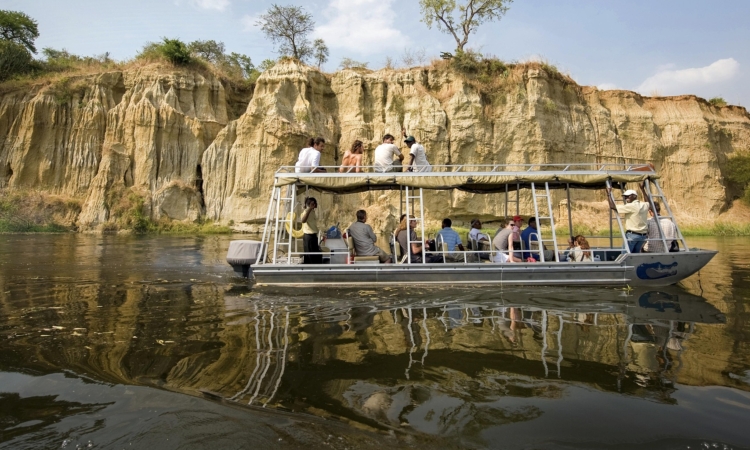
In Murchison Falls National Park, you can see warthogs during game drives, boat safaris, and guided nature walks.
If you want the best chance to see them, visit during the dry months from June to August and December to February.
Warthogs are an important part of the park and help keep the environment healthy. Protecting them is important for the future of the ecosystem.