
Among the many animals that live in Murchison Falls National Park are leopards, some of the most fascinating and hard-to-spot creatures. These animals are part of the Big Five and belong to the cat family.
Leopards are scientifically called Panthera pardus. They live in the Savannah grasslands and woodlands of the park, where they find plenty of prey since they are predators.
Leopards are mostly active at night, but they can sometimes be seen during the day, especially in the early morning or late evening.

They are solitary animals and depend on their quiet movements and speed to catch prey.
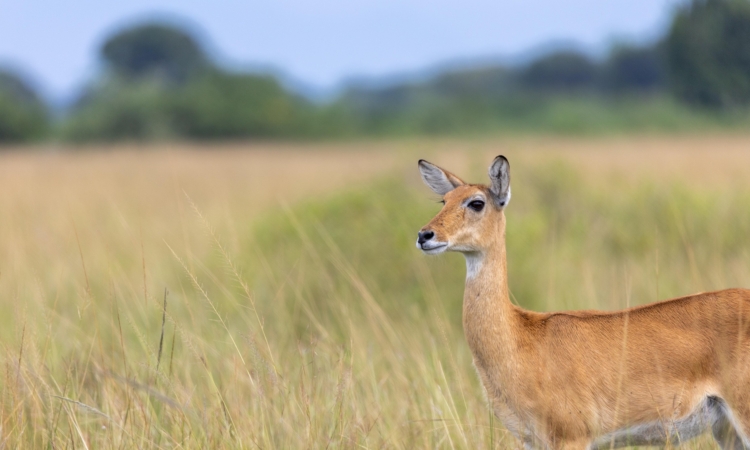
Leopards can hunt many types of animals, from small rodents and birds to bigger ones like antelopes, warthogs, Uganda kob, waterbucks, and bushbucks.
After hunting, they often drag their food into trees to keep it safe from other animals.
Leopards have a pregnancy period of about 90 to 105 days.
Their babies are called cubs. After birth, the mother nurses them for up to two years and teaches them how to survive.
Leopards raise their young in thick bushes or rocky areas where they are hidden from predators like lions and hyenas.
These animals can be dangerous to people, so it is important to keep a safe distance and avoid disturbing them.
Tourists can see leopards by joining game drives or going on guided nature walks with trained park rangers.
Leopards face threats such as loss of habitat and poaching for their skins and body parts.
To help protect them, the Uganda Wildlife Authority carries out regular population checks and other conservation efforts in Murchison Falls National Park.
Even with these challenges, leopards continue to draw visitors to the park, offering a chance to see these beautiful creatures and create lasting memories.
The best time to see leopards in Murchison Falls is during the dry season, from June to August and December to February.