
Hippos are semi-aquatic animals that live in the waters of the Nile as it flows through Murchison Falls National Park. They are the third-largest land mammals on Earth, after elephants and white rhinos.
A male hippo can weigh about 3,300 pounds. Hippos are often seen with their bodies half-submerged in water, which helps keep their thick skin moist.
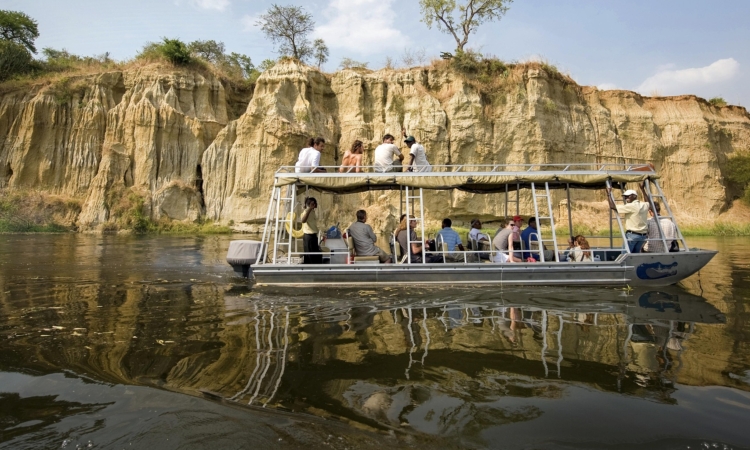
The best place to see hippos is along the banks of the Nile River, especially during boat cruises. Tourists can watch the hippos as they relax and interact with each other.

Murchison Falls National Park is home to one of the largest populations of hippos in East Africa, with hundreds of them living in the park. This makes it a great place to view these animals.
Hippos in Murchison Falls live in groups of about 30 members, called pods or bloats. Each group is led by a large male who protects the others from danger. Female hippos also stay in the group and form strong bonds with their young, known as calves.
Although hippos may look calm, they are actually very dangerous when threatened. They have large jaws and sharp teeth used for protection. Studies show that hippos kill more people in Africa than lions, so it is important to keep a safe distance when observing them.
Hippos are herbivores and feed on grass, reeds, and other plants. They are mostly active at night, which makes them nocturnal.
At night, hippos leave the water to graze on land and return to the water in the morning. An adult hippo can eat up to 80 pounds of vegetation in one night.
Hippos reproduce every 2 to 3 years, depending on factors such as food supply, water quality, and the presence of disease. Their pregnancy lasts about 220 to 240 days. A female gives birth to only one calf, usually in water. The calf can swim shortly after birth.
Calves are nursed by their mothers for about 6 to 8 months, and the mothers are very protective.
The future of hippos in Murchison Falls National Park depends on our efforts. There is an urgent need to protect them to make sure they survive in their natural home for years to come.