
Cheetahs, scientifically known as Acinonyx jubatus, are among the most fascinating predators found in Murchison Falls National Park. They are well known for their incredible speed, making them the fastest land animals, capable of reaching speeds up to 100 kilometers per hour.
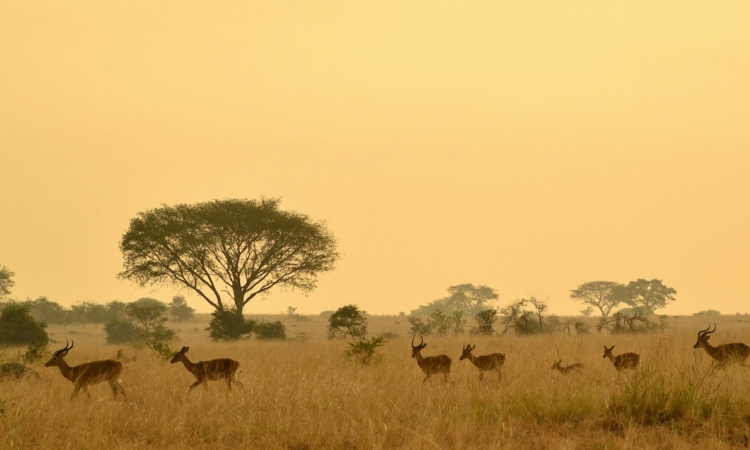
This speed helps them catch prey such as antelopes and gazelles. Occasionally, they may also go after smaller buffaloes. In Murchison Falls National Park, cheetahs are mostly found in the open Savannah grasslands, where there is plenty of prey. These areas make it easier for visitors to spot them during game drives.

Unlike other predators like lions, which live in groups called prides, cheetahs are mostly solitary. Sometimes, male cheetahs form small groups, often made up of brothers.
Cheetahs are among the least common large animals in the park. Their numbers are much lower compared to elephants, lions, or giraffes.
They are mainly seen around the Buligi Game Track and the Savannah plains near the Nile River.
Cheetahs have an interesting reproductive cycle. Their gestation period is about 90 to 95 days. The baby cheetah, called a cub, is born blind and depends completely on its mother.
The mother hides her cubs in thick vegetation to protect them from other predators.
As the cubs grow, the mother teaches them how to hunt, which is an important skill they need to survive on their own.
In Murchison Falls, cheetahs face several challenges. They often lose their food to stronger predators like lions and hyenas. Their cubs are also at risk from these predators.
In addition, cheetahs have a low birth rate, and habitat loss further affects their population.
To help protect them, the Uganda Wildlife Authority carries out conservation efforts such as anti-poaching patrols and monitoring cheetah numbers.
For visitors hoping to see cheetahs, the best time to visit is during the dry season, from June to August and December to February. During this time, wildlife is easier to spot.
Cheetahs play an important role in maintaining balance in the ecosystem. Their presence in Murchison Falls is a sign of a healthy natural environment, and their survival helps keep the park’s ecosystem strong.